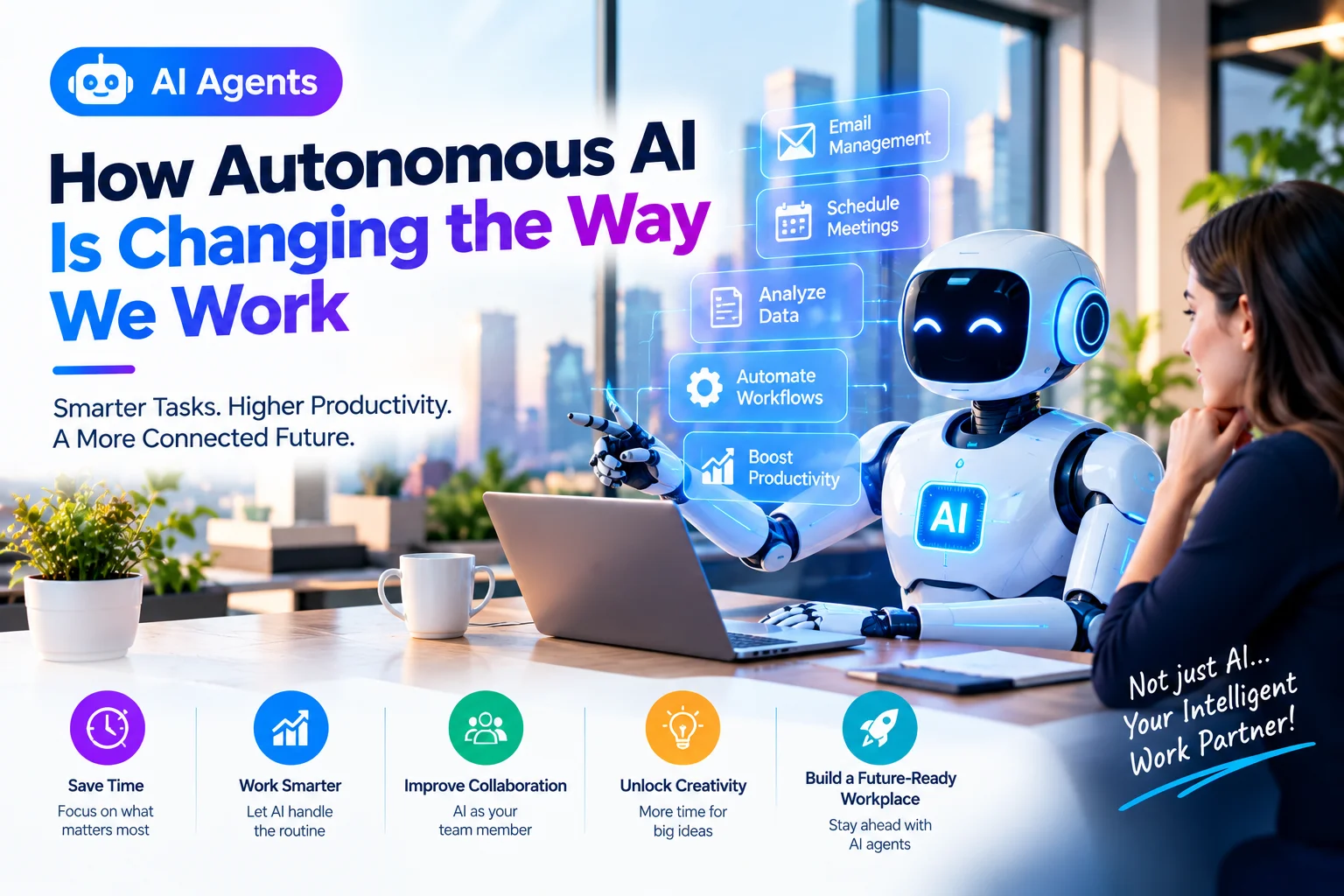

Over forty percent of routine office work hours are expected to be automated or assisted by software agents before the end of this decade. Companies are replacing static software programs with systems that can think, plan, and complete tasks on their own. This massive shift means that AI agents are quickly becoming regular digital coworkers in offices across the world. Instead of waiting for constant instructions from a person, these systems take a single objective and execute every necessary step to finish the job.
Businesses that adopt these automated tools are completing projects in minutes rather than weeks. Routine administrative chores like sorting emails, updating customer databases, and reconciling supplier invoices no longer require human labor. Workers who learn how to manage these digital tools can focus on creative projects, strategic planning, and building personal relationships. Understanding how autonomous software functions will give you a major advantage in your daily career.
What Exactly Are Autonomous AI Agents?
An autonomous agent is a software system designed to achieve goals without requiring non stop human guidance. You provide the agent with a clear end goal, such as auditing monthly sales expenses or creating a research summary on market competitors. The agent evaluates the request, breaks the project into smaller tasks, and creates an action plan. It selects the proper digital tools, completes each task in order, checks its own work, and corrects mistakes along the way.
Traditional computer programs can only follow rigid rules written in advance by human coders. If an old program runs into a missing file or an unfamiliar website layout, it crashes immediately. Modern AI agents use advanced reasoning models to adapt when things do not go as planned. When an agent encounters an obstacle, it tests alternative paths until it finds a solution that works.
These systems rely on three core components: memory, reasoning ability, and tool connections. Short term memory lets the agent keep track of actions it completed a few minutes ago. Long term memory helps it recall past projects, user preferences, and internal company policies. Tool connections give the system permission to click buttons in a web browser, run computer code, update spreadsheets, and send emails safely.
The Real Difference Between Chatbots and Autonomous Agents
Most people are familiar with basic chatbots that produce text answers when you ask a question. A chatbot is a passive assistant that sits quietly until a human user types a specific prompt. Once it prints an answer on the screen, the chatbot stops working completely. If you need a chatbot to help you finish a five step task, you must guide it with five separate prompts.
Autonomous AI agents function as active digital coworkers rather than simple chat windows. An agent does not need a person to oversee every small step of a project. When you assign an assignment, the agent creates its own internal prompts and executes multiple computer actions on its own. It can read an incoming client email, verify account details in a database, generate a custom invoice, and alert the finance department without human delay.
This shift from passive text generation to active execution changes how offices measure productivity. Employees no longer need to spend their days copying information between different web browser tabs. Instead, workers act as directors who assign tasks to digital agents and inspect the finished results. Your daily work changes from doing repetitive manual typing to managing smart digital assistants.
How Autonomous Agents Take Action Across Multiple Programs
The true power of modern agents comes from their ability to use computer tools just like human workers do. An agent can navigate the internet, open software applications, extract database records, and write files. It interacts with other software through direct application programming interfaces or by using visual screen controls. This flexibility allows agents to work inside legacy systems without requiring expensive custom software development.
Consider how an agent manages an incoming customer support ticket. The agent reads the customer message to identify the core issue and determine customer sentiment. It connects to the internal billing system to check the user payment status and subscription tier. Next, it searches company knowledge bases to locate the exact solution for the user problem.
After finding the correct answer, the agent drafts a polite reply and updates the customer ticket status. If the issue requires a refund, the agent can issue the credit within pre approved financial limits. When a task exceeds the authorized permissions of the agent, it routes the ticket to a human manager along with a complete summary. This entire process happens in seconds, providing instant help to customers at any hour of the day.
Real Business Tasks Handled by AI Agents Every Day
Repetitive administrative duties consume a huge portion of employee energy in every corporate department. AI agents at work take over these tedious routines, allowing teams to produce more value with less effort. Routine data entry, report generation, and meeting coordination are quickly becoming fully automated processes.
Sales teams use autonomous software agents to research and qualify sales leads automatically. The agent scans business directories, analyzes company websites, and identifies the best contacts for your sales team. It can send personalized outreach messages and answer initial product inquiries from potential buyers. When a prospect shows strong interest, the agent schedules a sales call directly onto the calendar of an account executive.
Finance departments deploy agents to process invoices and detect expense discrepancies. The agent reads scanned receipts, extracts line item details, and verifies prices against approved purchase orders. It flags duplicate charges or suspicious payments for human review while routing valid bills for payment. This continuous oversight prevents costly billing errors and keeps vendor accounts balanced.
Marketing departments rely on agents to monitor social media trends and draft marketing copy. An agent can track customer sentiment across web forums, identify trending industry topics, and produce draft articles. It can schedule posts across multiple social platforms and evaluate which headlines generate the highest click rates. Marketers can run complex multi channel campaigns without spending hours on manual scheduling.
How Multi Agent Systems Work Together as Virtual Teams
One of the most powerful developments in automation is the use of multi agent systems. Instead of asking one giant computer program to do everything, companies deploy groups of specialized agents. Each individual agent has a specific job description, distinct software tools, and clear performance goals. These digital workers communicate with each other, share data, and critique each other to complete complex projects.
Consider how a multi agent system handles an in depth financial research report. A coordinator agent receives the initial project goal from a business executive and builds a structured project timeline. It assigns a researcher agent to search public databases, news feeds, and corporate financial filings for relevant data. Once the raw facts are collected, an analyst agent runs financial calculations and identifies emerging revenue trends.
A writer agent takes those analytical findings and drafts a comprehensive executive brief. A separate editor agent reviews the written draft to check factual accuracy, tone, and grammar. If the editor finds a calculation mistake, it sends the report back to the analyst agent for immediate correction. The human executive receives a verified, polished report without ever doing the tedious research work by hand.
Comparing Software Automation Approaches
Understanding the differences between software tools helps businesses choose the right solution for their daily needs. The table below outlines how traditional software, basic chatbots, and autonomous AI agents compare across important operational areas.
| Operational Feature | Traditional Software | Standard Chatbots | Autonomous AI Agents |
|---|---|---|---|
| Decision Making | Follows rigid manual rules | Generates text based on prompts | Evaluates options and plans actions |
| Task Autonomy | Zero autonomy, requires input | Low autonomy, requires continuous prompts | High autonomy, works toward set goals |
| Tool Usage | Limited to its own codebase | Rare tool access outside chat window | Browses web, edits files, and runs code |
| Error Handling | Crashes when rules fail | Asks user for clarification | Tries new strategies to resolve errors |
Key Benefits of Deploying Digital Coworkers in Your Company
Speed is the most obvious advantage of using autonomous software agents in daily operations. Tasks that take human employees several days to complete can be finished by agents in minutes. Digital workers do not take coffee breaks, get distracted by phone calls, or experience mental fatigue. This continuous speed allows your company to deliver products and customer support faster than your competitors.
Cost efficiency improves significantly as automated systems handle higher volumes of work. You can expand your business operations and take on more clients without needing to hire massive support staffs. Lower operational expenses allow small businesses to compete effectively against large corporations with deep pockets. Reinvesting those labor savings into product research helps your business grow faster.
Workplace accuracy increases when routine data entry is handed over to automated software. Human workers naturally make typing mistakes when copying hundreds of numbers across spreadsheets for hours. Agents process data with consistent precision, eliminating transposed digits and overlooked entries. Fewer data errors protect your business from expensive compliance fines and billing disputes.
Employee satisfaction rises when workers are freed from boring, repetitive computer tasks. Nobody goes to college to spend their working life copying lines of text from PDF documents into database fields. Handing tedious chores to digital coworkers allows your staff to work on challenging, fulfilling projects. Happier employees stay with your company longer, reducing expensive staff turnover costs.
Top Industries Seeing Rapid Changes From Autonomous Systems
The healthcare industry uses autonomous agents to reduce administrative burnout among clinical staff. Medical agents transcribe patient consultations, update electronic health records, and verify insurance coverage. They monitor laboratory results and flag abnormal findings that require immediate physician attention. Doctors spend less time looking at computer monitors and more time speaking directly with patients.
Financial institutions rely heavily on intelligent software agents for risk assessment and fraud detection. Banking agents analyze millions of debit and credit card transactions in real time to spot suspicious patterns. Loan underwriting agents gather tax documents, verify credit scores, and calculate risk ratios for mortgage applicants. Faster loan evaluations allow banks to process applications in hours instead of weeks.
Software development firms use autonomous coding agents to build, test, and ship software applications. Coding agents can write standard functions, generate unit tests, and locate hidden bugs before software launches. They can scan code repositories for security flaws and suggest fixes automatically. Development teams can build high quality software products with fewer total bugs.
Online retail businesses use agents to manage inventory levels, adjust prices, and optimize advertising spend. Product agents monitor competitor pricing and adjust store discounts automatically to maximize sales volume. Logistics agents track weather disruptions and reroute delivery trucks to ensure packages arrive on schedule. These automated adjustments keep online stores profitable in competitive markets.
Core Steps to Set Up Your First Agent Workflow
Building an automated agent workflow does not require you to write complex software code from scratch. Modern visual automation tools and agent platforms allow you to connect applications using simple setup steps.
- Identify a repetitive, rule based business task that consumes at least five hours of staff time each week.
- Select a reliable agent platform that integrates smoothly with your existing email and database software.
- Define clear boundaries, task limits, and success metrics for the agent before running live operations.
- Create human approval checkpoints for high risk actions like large payments or sensitive client communications.
- Test the agent in a simulated environment to verify that it handles unexpected errors gracefully.
- Monitor performance logs regularly and refine your instructions to improve speed and output quality.
Starting with a small, low risk project allows your team to build confidence with autonomous software. Once your first agent is running smoothly and saving time, you can expand automation into other departments. A gradual implementation strategy minimizes business disruption and ensures strong return on your software investment.
Managing Risks, Hallucinations, and Safety Guardrails
While autonomous systems deliver huge benefits, they also introduce real operational risks that managers must address. Artificial intelligence models can sometimes generate incorrect facts with high confidence, a problem known as hallucination. If an agent acts on incorrect data without verification, it can make flawed business decisions. Companies must implement strict validation checks to prevent agents from spreading incorrect information.
Security vulnerabilities can emerge if agents are given unrestricted access to sensitive company files. An agent with full administrative rights might accidentally expose private customer data or overwrite important records. Businesses must follow the principle of least privilege, giving agents only the specific permissions needed to complete their assigned task. Sensitive actions like wire transfers or contract signings should always require human approval.
Infinite computing loops represent another technical challenge in autonomous task execution. An agent might get trapped trying to solve an impossible problem, repeating the same failed action dozens of times. This endless looping consumes expensive computing power and delays other business processes. Setting clear timeout limits and failure alerts ensures that stuck agents stop safely and notify human managers.
Ethical considerations require careful planning as automation replaces routine office jobs. While technology creates new high skill positions, it displaces workers who perform basic administrative tasks. Responsible company leaders invest in training programs to help employees learn how to manage digital agents. Retraining your workforce preserves valuable company knowledge and maintains high team morale.
Practical Skills Workers Need to Manage Autonomous Systems
You do not need a computer science degree to thrive in a workplace powered by autonomous agents. You do need to develop strong supervisory, analytical, and communication skills. Workers who know how to direct digital agents effectively will become the most valuable assets in their organizations.
Goal setting and instruction writing are essential skills for managing autonomous software. If you give an agent a vague objective, you will receive poor results that waste valuable time. You must learn to write clear project scopes, specify required file formats, and define acceptable error tolerances. Clear instructions allow the agent to construct an effective action plan from the start.
Critical thinking and output verification protect your business from costly automated mistakes. You should never assume an agent output is accurate without conducting a quick quality check. Skilled managers know how to audit source data, test code logic, and spot subtle factual errors. Your personal judgment provides the final safety check that automated machines cannot supply.
Workflow design allows you to connect multiple software tools and human workers into smooth business pipelines. You must know which parts of a project should be handled by agents and which parts require human empathy. Designing efficient collaboration systems will be a primary responsibility for modern team managers. Master these organizational skills to secure your career against technological changes.
The Economic Impact on Modern Jobs and Daily Careers
The rise of autonomous software is changing the structure of the modern workplace. Entry level jobs that once focused on manual data entry, filing, and basic research are shifting toward system supervision. Junior employees will manage small teams of digital agents early in their careers rather than doing manual tasks themselves. This shift allows young workers to gain high level management experience much faster.
Freelancers and solo entrepreneurs can build large, profitable businesses with minimal overhead. An independent consultant can use digital agents to handle client prospecting, billing, social media marketing, and research. A single person working with a team of specialized agents can produce the same output as a traditional ten person agency. This level of efficiency creates unprecedented opportunities for small business founders.
Salaries will reward workers who understand how to combine human creativity with automated execution. Technical knowledge combined with strong industry expertise will command premium compensation in the job market. Professionals who learn to direct autonomous software will complete projects in hours that take others days. This productivity advantage will drive career promotions and business growth across all major industries.
How to Prepare Your Business for Autonomous Software
Preparing your business for autonomous systems begins with organizing your internal company data. Software agents require access to clean, structured records to make accurate decisions. If your company files are scattered across disorganized folders, personal computers, and messy paper binders, agents cannot work effectively. Consolidating your knowledge bases and standardizing file formats prepares your business for fast automation.
Foster a culture of experimentation and open learning within your existing workforce. Encourage employees to test modern automation tools on their daily tasks and share their discoveries with the team. When staff members see that software removes their most boring chores, they embrace automation enthusiastically. A workforce that embraces new technology will always outpace a company that resists change.
Review your digital security policies and access controls before deploying autonomous agents. Ensure that your company network enforces multi factor authentication and detailed audit logging. Establishing clear security policies protects your intellectual property while giving agents the freedom to work efficiently. Strong preparation ensures your automation journey produces safe, profitable results.
Summary and Call to Action
Autonomous AI agents are fundamentally transforming how work is completed across modern industries. They move past simple chat conversations to plan, execute, and verify complex business projects on their own. Companies that adopt these systems gain massive advantages in operational speed, cost savings, and work quality. Workers who develop the skills to supervise digital coworkers will position themselves for long term career success.
The shift toward autonomous software is happening right now, and the tools are accessible to everyone. Start by identifying one repetitive, time consuming task in your daily work routine today. Test a modern agent platform, set up a simple workflow, and discover how much time you can save. Take the initiative now to master AI agents and build a productive, future ready career.


Discussion
No comments yet. Be the first to share your thoughts!
Leave a Comment