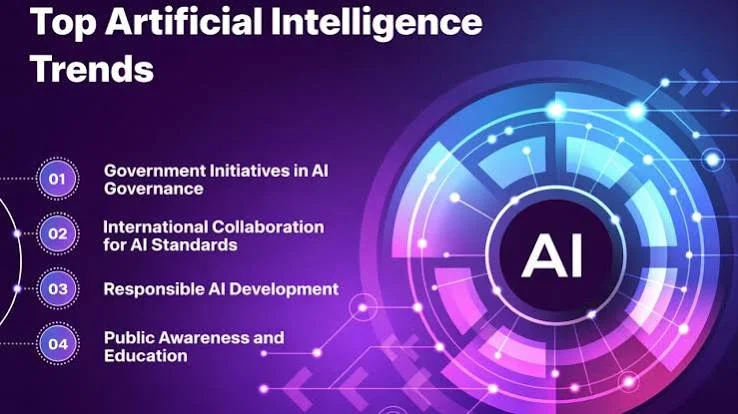

Global spending on artificial intelligence hardware and software surpassed two hundred billion dollars this year. Tech companies, healthcare networks, and industrial factories are investing heavily to automate complex daily operations. The future of artificial intelligence is no longer about simple chatbots answering basic questions. We are entering an era where software plans multi step actions, creates scientific formulas, and runs directly on everyday devices.
Knowing where this technology is heading gives business leaders, developers, and everyday workers a clear competitive edge. Smart systems will handle repetitive tasks, lower operating costs, and help people solve difficult technical problems. You do not need to be a computer scientist to benefit from these advancements. This guide explores the ten major tech trends that are defining the future of artificial intelligence in 2026 and beyond.
1. Autonomous AI Agents That Execute Complex Work
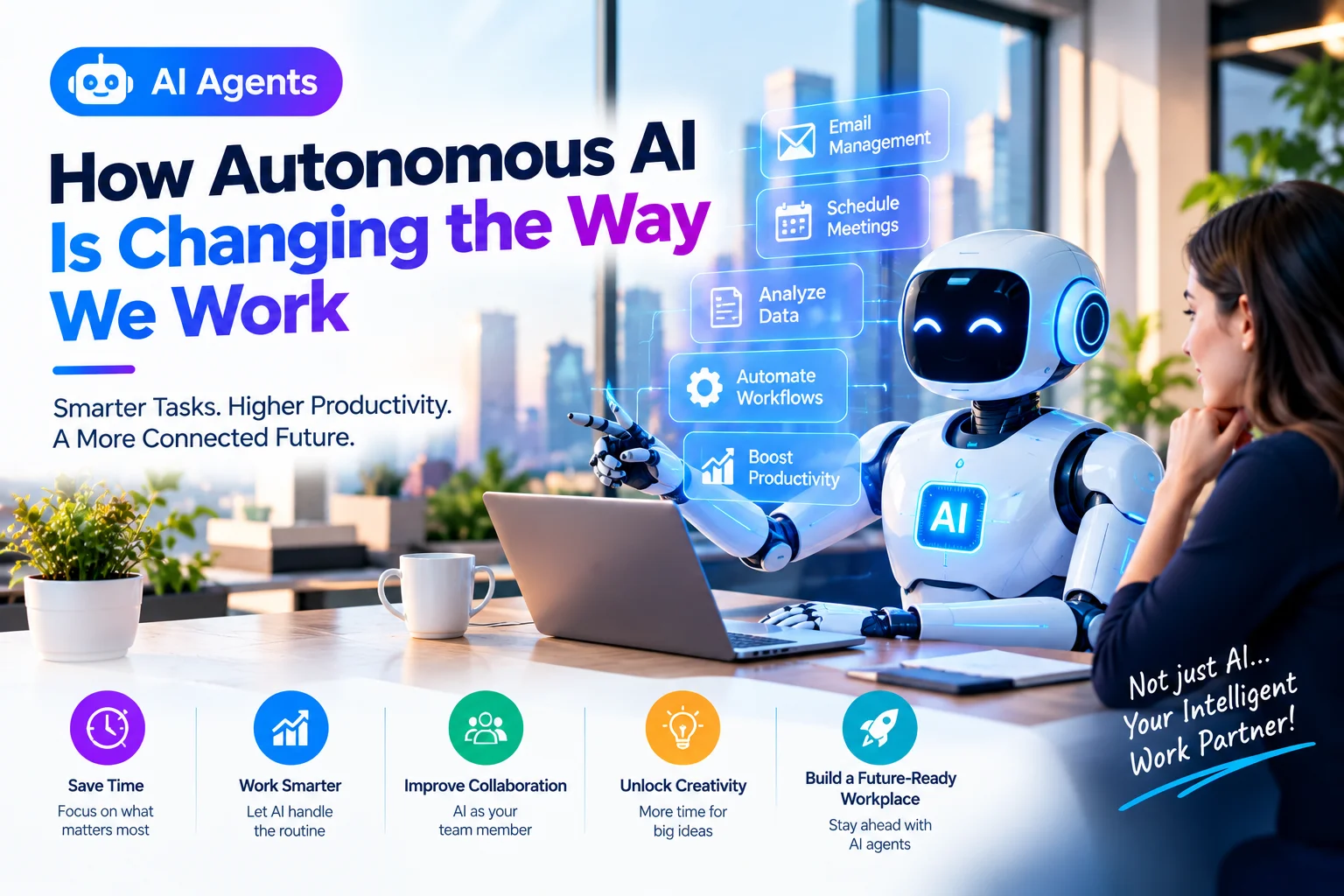
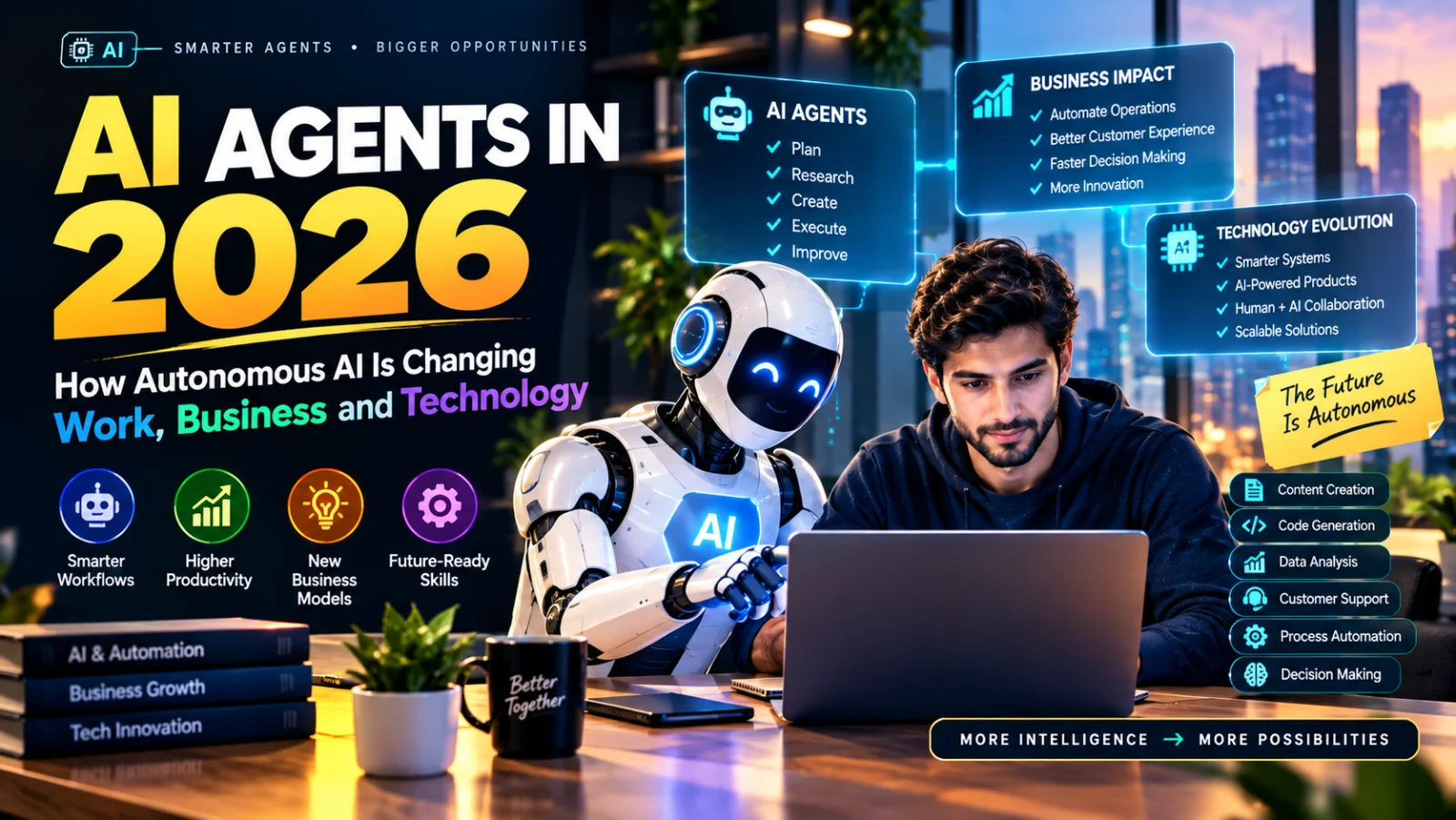
Simple prompt and response tools are quickly being replaced by autonomous digital agents. Instead of waiting for human instructions at every step, these systems take a broad objective and work independently until the task is complete. They can browse websites, extract spreadsheet records, write software code, and send client emails without non stop supervision.
These digital coworkers loop through cycles of planning, executing, and checking their own output. If an agent hits an error while processing an invoice, it tests an alternative method to resolve the problem. This self correcting ability makes automated systems far more dependable for enterprise operations. Businesses gain the ability to complete multi step projects in minutes rather than days.
Multi agent collaboration is also becoming a standard engineering practice. Companies deploy specialized teams of agents where one collects data, another writes reports, and a third audits the work for errors. These virtual teams collaborate seamlessly to solve complicated logistical and analytical problems. Human managers simply set project goals and review final results.
2. Small Language Models Running Directly on Local Devices
Massive cloud models require huge amounts of electric power and expensive server connections. To solve this problem, engineers are building small language models that operate entirely on local computer chips. These compact models deliver impressive reasoning abilities while fitting easily onto smartphones, laptops, and smart home appliances.
Running software locally provides instant response speeds without network lag. You can transcribe speech, summarize documents, and translate languages while working in airplane mode without internet access. Local processing also ensures total data privacy because personal files never leave your physical device. Sensitive personal records remain completely secure on your own hardware.
Small models consume a fraction of the electricity required by giant cloud data centers. Device manufacturers can install smart features into affordable consumer electronics without charging expensive cloud subscription fees. This trend makes high speed intelligence accessible to millions of people around the globe.
3. Multimodal Systems Processing Audio, Video, and Vision in Real Time
Early software models processed only written text inputs and outputs. Modern multimodal systems process spoken audio, live camera feeds, text documents, and sensory data at the exact same moment. This unified processing allows computers to interact with the physical environment much like human beings do.
A technician wearing smart glasses can look at a broken factory engine and ask for repair guidance. The system sees the loose bolt, hears unusual engine rattles, and speaks step by step repair instructions directly into the ear of the technician. This fluid interaction eliminates the need to type queries into computer keyboards or search through thick paper manuals.
Customer service and education will also see major upgrades through multimodal tools. Students can show homework problems to digital tutors through phone cameras and receive spoken explanations with visual diagrams. Voice conversations with computer assistants will feel natural, with the software detecting vocal emotion and pausing when you speak.
4. Advanced Reasoning and Test Time Compute
Training larger neural networks on bigger text datasets is no longer the only way to improve software accuracy. Researchers are now focusing on reasoning models that think carefully before providing an answer. These models use extra computing power during the answer phase to test multiple logic paths and verify factual claims.
Thinking through complex math problems or programming logic prevents common software hallucinations. When asked a difficult scientific question, the model breaks the problem into smaller equations, checks its internal math, and corrects flawed assumptions. This structured reasoning makes automated tools reliable for high stakes academic and industrial research.
Software engineers use reasoning models to debug massive enterprise software systems. The tool analyzes system architecture, traces data flow across thousands of files, and identifies hidden performance bottlenecks. Developers spend less time searching for software bugs and more time building creative features.
5. Custom Silicon and Specialized Hardware Accelerators
The demand for computing power has triggered a race to build custom computer chips designed specifically for neural networks. Traditional processors are being replaced by specialized chips called neural processing units. These custom processors execute matrix multiplication at blistering speeds while using very little electric power.
Every major technology firm is designing proprietary silicon to reduce reliance on third party chip vendors. Custom hardware allows cloud providers to lower server rental prices for business clients. At the same time, consumer device makers are putting dedicated neural chips into smartphones, cars, and smart watches.
Specialized hardware allows self driving vehicles to process live camera data in milliseconds. Faster on board processing makes automated driving systems safer in heavy rain, dense fog, and fast highway traffic. Hardware innovation continues to expand what software can achieve in physical environments.
6. High Quality Synthetic Data Powering Model Training
Researchers are quickly running out of fresh human written text on the public internet to train newer systems. To overcome this data wall, computer scientists use advanced models to create structured synthetic data. These synthetic datasets contain millions of complex logic puzzles, coding challenges, and scientific simulations.
Training models on carefully filtered synthetic data produces better reasoning skills than training on random internet chatter. Synthetic generation allows engineers to eliminate toxic text, factual errors, and duplicate web pages from training pipelines. The resulting models show greater mathematical accuracy and fewer social biases.
Synthetic data also solves privacy challenges in sensitive fields like healthcare and banking. Medical researchers can generate millions of synthetic patient records that mimic real health conditions without exposing private patient identities. Scientists can train diagnostic algorithms freely while protecting personal health privacy.
Overview of Key Artificial Intelligence Trends
Understanding how different technology trends interact helps you plan your business strategy. The table below summarizes the ten major trends shaping the future of artificial intelligence.
| Trend Name | Primary Technology | Key Business Benefit | Main Industry Impact |
|---|---|---|---|
| Autonomous Agents | Goal planning and tool use | Completes multi step tasks automatically | Enterprise software and operations |
| Small Language Models | Model compression and quantization | Runs locally with zero internet latency | Mobile devices and consumer electronics |
| Multimodal AI | Audio, vision, and text processing | Real time interaction with physical surroundings | Education, field service, and customer care |
| Reasoning Models | Test time compute and chain of thought | Solves complex math and logic accurately | Scientific research and software engineering |
| Custom AI Silicon | Dedicated neural processing units | Lowers computing costs and power needs | Cloud computing and autonomous vehicles |
| Synthetic Datasets | Model generated training material | Overcomes data shortages and protects privacy | Machine learning and medical research |
| AI Drug Discovery | Molecular modeling and biology prediction | Discovers life saving medicines faster | Healthcare and biotechnology |
| Physical Robotics | Spatial awareness and reinforcement learning | Automates physical labor in warehouses | Manufacturing, logistics, and retail |
| Stronger Governance | Digital watermarking and compliance tools | Protects copyright and prevents fraud | Legal, finance, and media production |
| Green Data Centers | Clean energy and liquid cooling tech | Reduces carbon emissions and water usage | Energy grids and cloud infrastructure |
7. Accelerated Drug Discovery and Biotechnology
Biotechnology is experiencing rapid progress thanks to deep learning algorithms that predict molecular behavior. Systems can model how complex proteins fold in three dimensions, solving a biological puzzle that stumped scientists for decades. Researchers use this predictive power to design custom molecules that target specific diseases with high precision.
Developing a brand new prescription medication historically took over a decade and cost billions of dollars. Artificial intelligence systems can screen billions of chemical compounds virtually in a matter of weeks. They identify promising drug candidates, predict potential side effects, and optimize chemical stability before human trials begin.
Personalized medicine will become common as algorithms analyze individual genetic sequences. Doctors will prescribe custom therapies matched to the unique DNA profile of each patient. Faster drug discovery will save millions of lives and significantly lower healthcare costs worldwide.
8. Physical Robotics and Spatial Intelligence
Smart software is moving out of computer screens and entering the physical world through advanced robotics. Modern robots do not just repeat static pre programmed movements along an assembly line. They use spatial intelligence models to perceive depth, recognize obstacles, and manipulate unfamiliar objects safely.
Warehouse logistics facilities use autonomous mobile robots to sort packages, manage inventory, and load delivery trucks. These machines adapt instantly when a box falls or a human coworker walks across their path. In construction and agriculture, automated tractors and drones plant crops, monitor soil moisture, and inspect structural frames.
Humanoid robots designed for general labor are entering commercial pilot programs. These machines can navigate standard stairs, open doorways, and use physical hand tools built for humans. Deploying robots for dangerous physical tasks keeps human workers safe from industrial accidents.
9. Stronger Governance, Safety Rules, and Digital Provenance
As synthetic media and automated tools become widespread, governments and corporations are enforcing strict safety rules. New regulations require technology companies to test models for security risks, algorithmic bias, and copyright compliance before release. Independent safety audits are becoming mandatory across major international markets.
Digital provenance tools use cryptographic watermarking to identify whether a picture, audio track, or video was generated by a computer. News organizations, social media networks, and legal courts rely on these digital watermarks to stop deepfake fraud and verify authentic media. Clear labeling helps maintain public trust in online information.
Corporate compliance software monitors internal artificial intelligence usage to protect trade secrets. These security tools prevent employees from accidentally uploading proprietary business plans or client records to public servers. Strong digital governance allows enterprises to adopt automation safely without legal risks.
10. Energy Efficient Green Computing and Data Center Power
Running massive machine learning server clusters requires enormous amounts of electricity and cooling water. As computing demand surges, the technology industry is investing heavily in clean energy infrastructure. Tech firms are funding modern nuclear power plants, geothermal energy projects, and solar farms to power their operations.
Advanced liquid cooling systems are replacing noisy, power hungry air conditioning units inside server rooms. Liquid cooling transfers heat away from microchips much more efficiently, cutting data center water consumption. Engineers are also designing ultra efficient neural architectures that require half the computing power to achieve top tier performance.
Smart energy grids use machine learning models to predict power demand and distribute renewable electricity dynamically. These energy management systems balance electricity loads across server clusters based on when local wind and solar power are highest. Building sustainable computing infrastructure ensures that technological progress does not harm the global climate.
Practical Steps to Prepare Your Business for Future AI Trends
Adopting new technology requires a clear strategy rather than rushing to buy every software tool on the market. Companies should begin by auditing their internal operations to identify repetitive, time consuming tasks. Routine data entry, customer ticket routing, and inventory tracking are perfect starting points for automation.
- Clean and centralize your internal company data so software tools can access accurate information easily.
- Select privacy focused software platforms that guarantee your corporate data is never used to train public models.
- Train your employees to work alongside automated agents and use digital productivity assistants daily.
- Establish clear human review checkpoints for sensitive business operations, financial payments, and client communications.
Starting with small, low risk pilot projects allows your team to build technical confidence. Measure the time savings, cost reductions, and error rates from your initial pilot projects carefully. Once a workflow proves successful, expand automation into other departments across your organization. A methodical rollout strategy ensures strong return on your software investment.
How Workers Can Future Proof Their Careers
The changing technological landscape will reshape job descriptions across every professional industry. While software will automate routine computer chores, human judgment, empathy, and strategic thinking remain irreplaceable. Workers who learn to supervise automated tools will become the most valuable assets in their organizations.
Develop strong communication skills to define clear project goals for digital agents. Knowing how to write precise instructions, establish boundary limits, and review software outputs is a critical modern capability. Critical thinking allows you to spot subtle factual errors and logical flaws that automated systems might miss.
Focus on building interpersonal skills like team leadership, client relationship management, and creative problem solving. Machines excel at processing vast quantities of data quickly, but humans excel at understanding human needs and building trust. Combining deep industry knowledge with the ability to manage automated software ensures a resilient, high paying career in the years ahead.
The Long Term Impact on Society and Daily Life
The future of artificial intelligence will bring noticeable changes to how communities live and work. Everyday consumer software will anticipate user needs, organizing personal schedules, managing household energy use, and planning travel itineraries automatically. Education will become personalized to the learning speed and interests of every student.
Scientific discovery will move at a much faster pace across environmental science, physics, and materials engineering. Algorithms will help researchers design more efficient solar panels, discover lighter battery materials, and clean up plastic pollution. Solving complex global challenges will become achievable through the combined power of human ingenuity and machine speed.
Responsible development remains essential to ensure that the benefits of automation are shared widely across society. Open public discussions about job retraining, data privacy, and ethical technology use will shape how these tools are integrated into daily life. Thoughtful planning today guarantees a prosperous, technologically advanced future for everyone.
Summary and Call to Action
The future of artificial intelligence is arriving fast through autonomous agents, local small models, advanced reasoning systems, and physical robotics. These technological shifts will eliminate routine administrative busywork, speed up scientific breakthroughs, and make businesses far more productive. Leaders and workers who understand these ten trends can make smart decisions to grow their organizations and careers.
Take the initiative today to prepare yourself for the next wave of technological progress. Test an autonomous agent tool on a daily task, explore small models on your phone, or audit your company workflows for automation opportunities. Start exploring modern artificial intelligence tools right now and position yourself for success in 2026 and beyond.

Discussion
No comments yet. Be the first to share your thoughts!
Leave a Comment