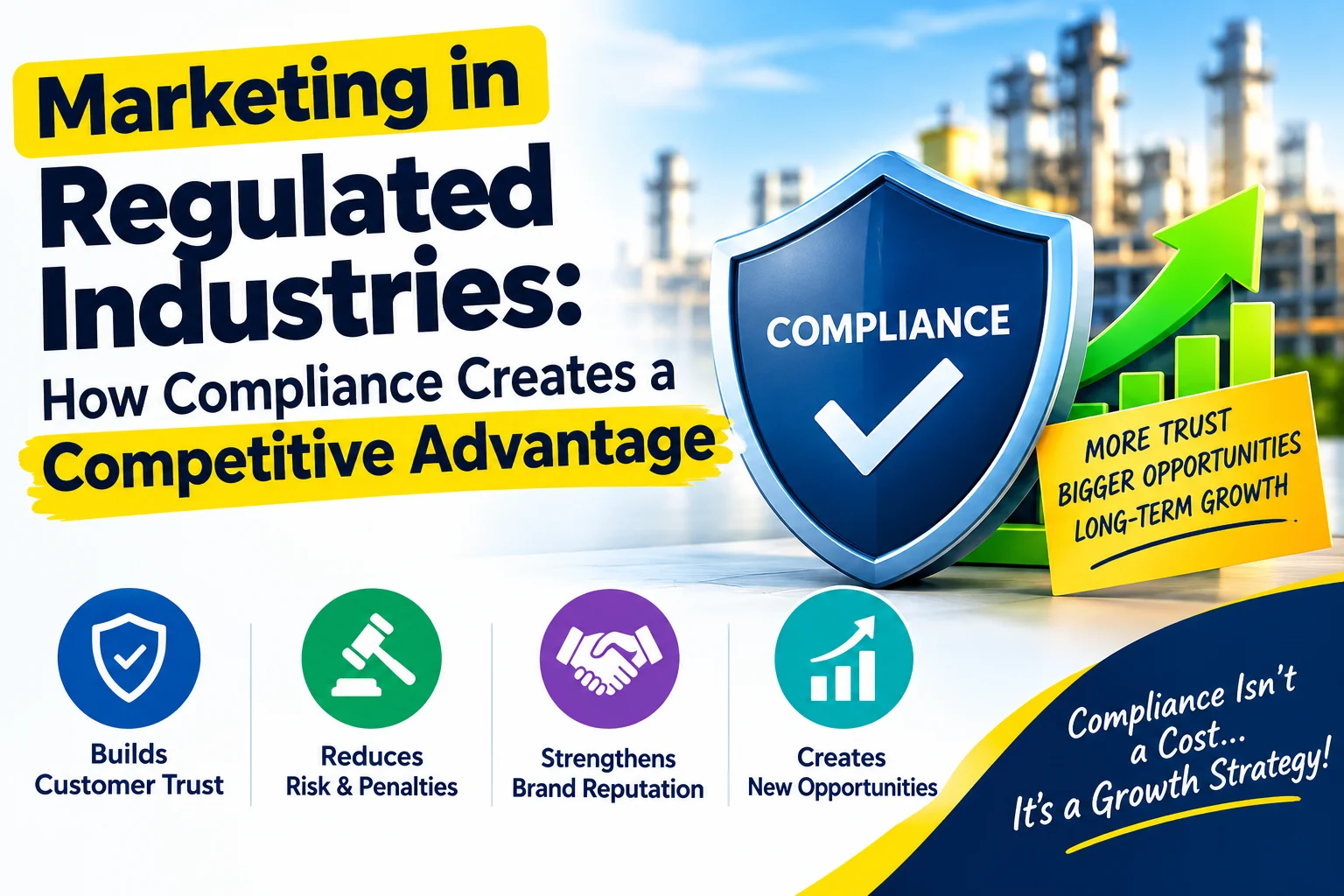

Over eighty percent of consumers say trust is the deciding factor before they buy from a brand. In heavily monitored sectors like banking, healthcare, and insurance, government fines for false advertising reach billions of dollars each year. Many business owners view legal rules as an annoying barrier that kills creative ideas. Smart organizations take the opposite view and turn these strict guidelines into their greatest sales weapon.
Marketing in Regulated Industries requires patience, accurate information, and total honesty. When you follow government guidelines consistently, buyers feel safe choosing your products over reckless rivals. Legal rules force your team to produce clear messages that highlight real value rather than empty promises. This detailed guide reveals how building a solid Regulated Market Strategy helps you earn customer loyalty and grow your business.
What Does Marketing in Regulated Industries Mean?
Marketing in Regulated Industries involves promoting products or services that must follow strict federal, state, or international laws. These sectors include financial services, pharmaceuticals, medical care, insurance, legal counsel, and energy. Government bodies oversee these fields because dishonest claims can cause severe physical, financial, or emotional harm to everyday citizens.
Every public statement your business makes falls under careful government scrutiny. This means your blog posts, social media updates, print flyers, and video advertisements must include proper disclosures. You cannot make bold claims about results without showing hard evidence to back them up. Following these rules protects buyers from deception while keeping your company safe from costly penalties.
Traditional marketing often relies on flashy slogans and exaggerated claims to capture attention. Regulated advertising requires total transparency, direct language, and clear context. While this standard demands more effort upfront, it creates higher quality promotional materials that stand out in crowded markets. Buyers notice when a company presents facts clearly and respects their intelligence.
Why Companies Treat Compliance as an Annoying Roadblock
Many creative teams view company lawyers as the people who say no to every great idea. Marketing departments want to launch campaigns quickly to capture fresh trends. Legal teams want to review every single word to prevent lawsuits and regulatory fines. This clash often creates long delays, missed promotional opportunities, and internal tension.
The approval process can feel painfully slow when teams lack clear systems. Drafts move back and forth between writers, designers, managers, and legal reviewers for weeks. By the time a campaign receives final legal approval, the original excitement has faded away. This frustration causes some marketers to cut corners, which exposes the business to massive regulatory risks.
Viewing rules as a negative obstacle prevents your business from seeing the bigger picture. When you treat legal standards as design boundaries rather than roadblocks, your creative process improves. Clear boundaries give your writers and designers specific goals to aim for without guessing what is allowed. Shifting this mindset turns legal oversight from a bottleneck into a strong creative partner.
How Strict Compliance Builds Deep Customer Trust
Trust is the most valuable currency in any business where money, health, or personal safety is at stake. When people shop for a mortgage or select a medical treatment, they feel nervous about making mistakes. Marketing Compliance reassures cautious buyers that your company operates with complete integrity. Clear disclosures and accurate explanations show that you have nothing to hide from your audience.
Honest marketing creates lasting customer relationships that survive market downturns. When your advertisements match the actual product experience, customers never feel tricked or disappointed. Satisfied clients recommend your services to friends, family members, and business colleagues. This positive word of mouth marketing generates high value leads without extra advertising spend.
Deceptive brands might win quick sales in the beginning, but they lose customers just as fast. Negative online reviews and public complaints destroy brand reputation overnight. Compliant organizations build enduring brand equity that grows stronger with each passing year. Consistency and honesty create a loyal customer base that competitors cannot easily steal.
Using Compliance as a Competitive Advantage
Most companies in strictly monitored fields try to do the bare minimum to avoid getting fined. They hide important warnings in tiny fonts and write confusing terms that nobody can read. You create an immediate edge when you make your disclosures simple, visible, and easy to read. Customers appreciate plain language and reward transparent companies with their business.
Careless competitors often take shortcuts that eventually catch up with them. When a rival receives a public fine or a cease order from regulators, their customer trust vanishes instantly. Your disciplined approach ensures that your brand remains stable, respected, and open for business. Maintaining strict standards positions your firm as the safe and reliable choice in your industry.
Compliance as a Competitive Advantage means using your legal discipline to win larger corporate contracts. Big enterprise clients and government buyers demand strict data protection and legal safety from their vendors. Having certified, audited marketing workflows proves that your company is ready for serious enterprise partnerships. Your legal discipline becomes a primary selling point that closes major deals.
Major Rules Across Key Business Sectors
Financial institutions must follow strict advertising guidelines established by government watchdogs. Banks, investment firms, and credit unions cannot guarantee profits or downplay investment risks in their promotions. Every claim about interest rates, historical returns, or loan terms must include specific legal disclosures. Clear communication protects investors while building public confidence in the financial system.
Healthcare providers and pharmaceutical companies face even tighter promotional restrictions. Medical ads cannot promise miracle cures, guarantee health outcomes, or hide dangerous side effects from patients. Patient privacy laws also prevent healthcare marketers from sharing personal medical stories without written consent. Providing truthful health education helps patients make sound medical decisions with their doctors.
Insurance agencies and law firms must also maintain high ethical standards in all promotional materials. Lawyers cannot promise specific settlement amounts or claim guaranteed court victories in their commercials. Insurance agents must explain coverage limits, exclusions, and deductibles in clear terms before selling policies. Clear explanations prevent angry customer disputes when policyholders file claims later on.
Building a Fast and Smooth Review Process
Speed and legal safety can exist together when you build an organized review system. The first step involves creating shared style guides that list approved words, required disclaimers, and banned phrases. When copywriters know the legal boundaries from day one, they write compliant drafts on the very first try. This preparation cuts down on endless editing rounds between marketing and legal staff.
Using modular content libraries speeds up the production process across all marketing channels. Your legal team can review and pre approve paragraphs, customer testimonials, product descriptions, and disclaimers in advance. Marketers then assemble new blog posts, emails, and landing pages using these verified building blocks. This modular workflow lets you launch new campaigns in hours instead of weeks.
Regular training sessions keep both creative teams and legal reviewers aligned on current goals. Marketers learn about new regulatory rulings, while legal advisors discover what creative formats perform best online. Open communication builds mutual respect between departments and removes fear from the review process. When everyone works toward the same objective, campaign production runs smoothly.
Five Practical Ways to Turn Legal Rules into Marketing Power
Turning strict regulations into a strong market position requires consistent daily habits and clear workflows. Here are five practical methods your business can adopt right away:
- Train creative writers and graphic designers on specific advertising rules so they produce safe materials from the start.
- Create a central library of pre approved marketing copy, product descriptions, and legal disclaimers for fast content creation.
- Keep a detailed audit trail of every published asset, including timestamps, review notes, and written legal approvals.
- Focus your content strategy on consumer education by answering common buyer questions with accurate and factual data.
- Involve legal advisors during the early brainstorming phase so they can suggest safe creative angles before work begins.
Content Strategies That Educate and Stay Fully Compliant
Educational content is the safest and most effective marketing approach for strictly monitored industries. Instead of pushing hard sales pitches, focus on teaching your audience how to solve common problems. Write simple guides that explain how complicated financial products work or what questions to ask a doctor. Helpful educational materials attract motivated buyers who are actively searching for reliable answers.
Case studies and customer stories provide powerful social proof when created within legal guidelines. Always secure written release forms from clients before sharing their success stories in your marketing materials. Avoid presenting exceptional results as typical outcomes for every average buyer. Adding realistic context and standard disclaimers protects your business while demonstrating your real world capabilities.
Thought leadership articles written by internal subject experts build massive authority for your company. Have your senior risk managers, legal directors, or technical specialists author informational articles for industry publications. When buyers see that your leadership team possesses deep industry knowledge, their confidence in your brand grows. High authority content generates premium backlinks, improves search rankings, and attracts high intent prospects.
Handling Customer Data and Privacy Rules Safely
Modern marketing depends heavily on consumer data to deliver relevant ads and personalized online experiences. Global privacy laws give consumers strict control over how businesses collect, store, and use their personal data. Companies that violate privacy standards face severe public backlash and massive regulatory fines. Treating user data with care is an essential part of maintaining a trustworthy brand reputation.
Building transparent consent forms is the best way to collect customer information safely. Explain clearly what data you collect, why you need it, and how you protect it from outside access. Never buy unverified email lists or track user behavior without clear permission from the website visitor. Ethical data practices keep you compliant with privacy laws while showing respect for your audience.
Secure your internal marketing databases with strong access controls and data encryption. Limit customer file access to staff members who actively need the information to perform their daily duties. Regularly delete outdated customer records that your company no longer needs for business operations. Protecting user data proves to customers that your business values their privacy and security.
How to Measure the Financial Value of Safe Marketing
Measuring the financial return of compliant marketing involves looking at both revenue gains and risk reduction. Compliant campaigns suffer zero legal fines, saving your company millions of dollars in unexpected penalties. You also avoid expensive emergency redesigns, legal defense fees, and public relations cleanup costs. Preventing brand damage preserves company value and protects shareholder investments.
Compliant marketing strategies produce higher customer retention rates and higher lifetime customer values. Clients who buy based on honest descriptions stay with your firm longer because your service meets their expectations. Loyal customers generate steady recurring revenue and cost far less to support than constantly acquiring new buyers. High retention rates provide stable cash flow that allows your business to invest in long term growth.
Tracking conversion rates on clear, transparent landing pages often reveals surprising performance gains. Modern consumers are skeptical of exaggerated sales copy, fake countdown timers, and unrealistic promises. Pages with clear explanations, honest pricing, and visible disclaimers often convert at higher rates than hype filled pages. Measuring these metrics proves that honesty delivers superior financial results over time.
Upcoming Trends in Advertising Laws
Government regulators worldwide are creating new standards for artificial intelligence and automated marketing tools. Lawmakers want to ensure that AI generated content does not mislead consumers or spread false claims. Companies that use automated tools to write ad copy must verify facts and disclose AI involvement where required. Establishing human review processes now prepares your marketing team for future AI regulations.
Environmental claims are also facing unprecedented scrutiny from regulatory agencies around the world. Brands can no longer make vague claims about being green, eco friendly, or sustainable without verified third party proof. Regulators actively penalize organizations that engage in greenwashing to attract environmentally conscious buyers. Backing up environmental statements with certified data ensures your green marketing remains fully compliant.
Influencer partnerships and social media sponsorships are seeing much tighter enforcement from consumer protection agencies. Influencers must clearly disclose paid brand partnerships at the very beginning of their video posts and image captions. Brands are legally responsible for the claims that their paid influencers make on social channels. Setting strict partner guidelines protects your company reputation across all digital platforms.
Put Compliance at the Heart of Your Growth Strategy
Marketing in Regulated Industries does not have to be slow, frustrating, or boring. When you build your campaigns on a foundation of truth, clarity, and legal discipline, you create an unbeatable advantage. Strict guidelines push your creative team to produce informative, high value content that builds genuine consumer trust. Transparent communication sets your brand apart from reckless competitors who rely on empty claims.
Treating compliance as a core business strength protects your company from fines and builds long term brand equity. Establishing clear review processes, modular content libraries, and open communication between legal and marketing teams ensures fast execution. Your audience will reward your honesty with loyalty, repeat purchases, and enthusiastic referrals.
Start evaluating your current marketing review process today to identify bottlenecks and legal vulnerabilities. Train your creative staff on regulatory standards and build pre approved asset libraries to speed up campaign delivery. Put compliance at the center of your marketing strategy and watch your brand earn the trust, respect, and market share it deserves.



Discussion
No comments yet. Be the first to share your thoughts!
Leave a Comment