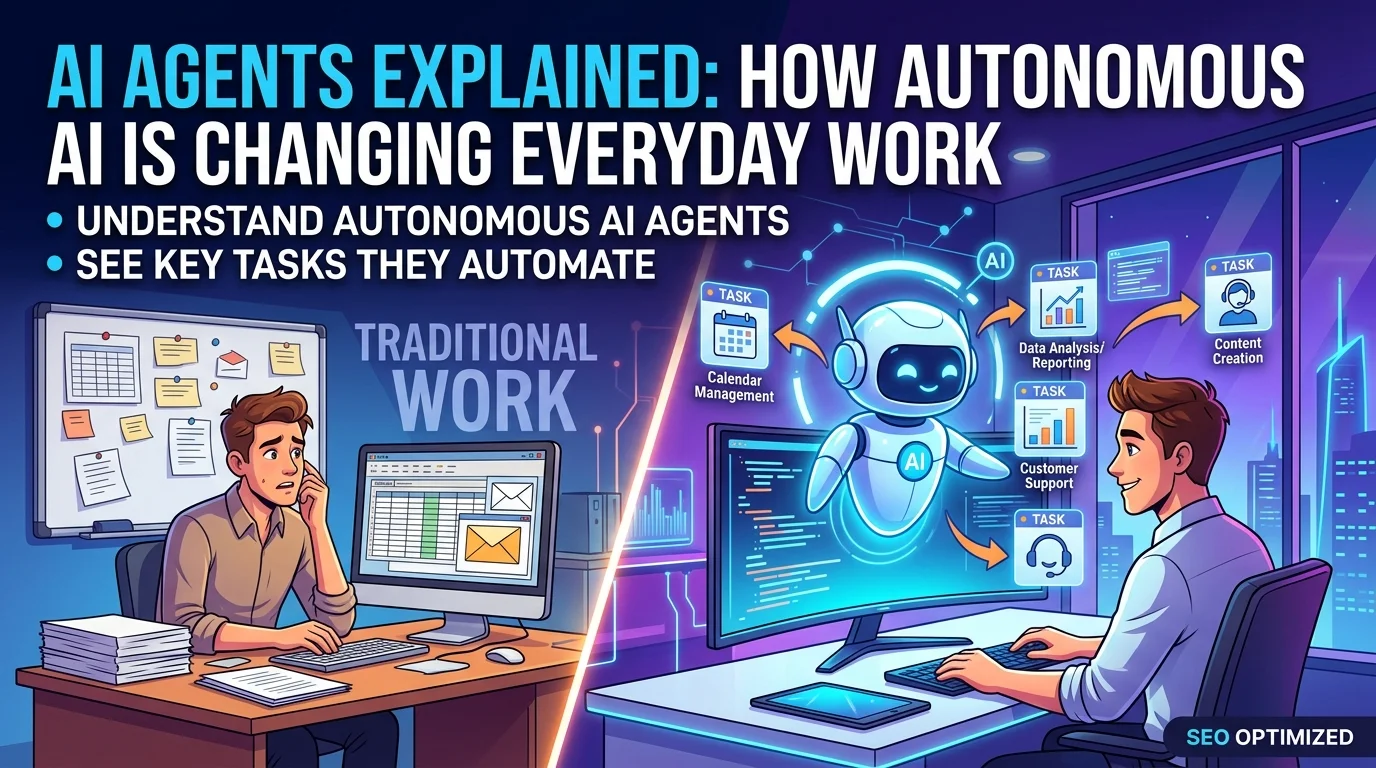

More than sixty percent of the average workday goes toward repetitive coordination rather than creative problem solving. Workers spend hours organizing emails, copying data between spreadsheets, and updating task boards. The arrival of autonomous software is changing that daily struggle. AI Agents Explained shows how independent software programs complete multi step goals without human supervision.
Organizations no longer need to rely on static automation that breaks whenever a minor detail changes. Smart agents adapt to new information, make independent choices, and complete complex assignments across multiple platforms. This shift from simple chat tools to active digital assistants is altering how modern companies operate. Learning how these autonomous systems function will help you prepare for the future of productivity.
What Are AI Agents in Simple Terms?
An autonomous agent is an advanced computer program that receives a broad goal and figures out the necessary steps on its own. Unlike basic tools that wait for manual clicks, an agent observes its environment, makes plans, and takes action. If it hits an obstacle, it analyzes what went wrong and tries an alternate approach. This ability to self correct makes the technology practical for daily workplace tasks.
These digital workers connect directly to web browsers, databases, and office email clients. You can tell an agent to organize a meeting with five busy executives, and it handles the entire exchange. It checks calendar schedules, drafts invitations, and sends confirmation notes. The user only steps in when a final decision requires human approval.
How Autonomous AI Differs from Basic Chatbots
Standard chatbots respond to direct prompts with text answers, but they stop working as soon as they generate a response. If you ask a chatbot to plan a trip, it gives you a list of flight recommendations. It cannot actually open your travel portal, book the ticket, and enter your corporate credit card details. You still have to do all the manual execution yourself.
Autonomous AI Agents take action in addition to generating text. They break down a high level goal into a sequence of smaller tasks and execute them across multiple digital platforms. An agent can research competitors, summarize key findings into a document, and upload that report directly to your team drive. This active execution separates autonomous agents from traditional conversation bots.
How AI Agents Plan, Execute, and Learn
Every smart agent operates around a continuous cycle of observation, planning, action, and evaluation. First, the agent receives an objective from a human user or another software system. It analyzes the request and creates a structured action plan to reach the desired outcome.
Next, the agent selects the right digital tools to carry out each step in its plan. It might run a web search, query an internal database, or trigger an API call to an external service. After completing each step, it evaluates whether the action brought it closer to the final goal. If an error occurs, the agent revises its plan and attempts an alternative method until the objective is met.
Memory systems allow agents to store past interactions and learn from previous mistakes. Short term memory helps the agent track the current assignment, while long term memory stores company rules and user preferences. This stored experience makes the agent faster and more accurate on future projects.
Core Ways Autonomous AI Agents Are Transforming Everyday Jobs
Companies across various sectors are deploying autonomous agents to handle tedious daily workflows. Here are several clear ways these tools improve workplace productivity:
- Processing incoming support tickets, diagnosing customer issues, and issuing refunds automatically.
- Conducting market research, gathering pricing data from competitor sites, and building executive summaries.
- Scheduling complex multi person meetings across different time zones without calendar conflicts.
- Reviewing software code for security bugs and applying tested patches before release.
- Managing supply orders and updating warehouse inventory levels based on real time sales numbers.
Transforming Customer Support and Service Operations
Customer service teams often struggle with high ticket volumes during peak shopping seasons. Autonomous agents handle tier one support inquiries instantly without making customers wait in long queues. They look up tracking numbers, process return requests, and answer policy questions with complete accuracy.
When an agent encounters an angry customer or an unusual issue, it routes the ticket to a human manager. It provides the human agent with a concise summary of the problem and suggests potential resolutions. This seamless handover saves time and allows human representatives to focus on complex emotional situations. Customers receive faster resolutions while support staff experience less daily burnout.
Automating Sales Pipelines and Outreach
Sales representatives spend an enormous amount of time finding qualified business leads and sending introductory emails. Autonomous AI tools can identify potential buyers by scanning industry directories and social networks. They verify contact information and draft personalized messages based on each prospect specific business needs.
Once an outreach campaign launches, the agent monitors response rates and schedules follow up messages automatically. When a prospective client replies with interest, the agent coordinates calendar availability and books an introductory call. Sales reps can spend their working hours closing deals and building relationships instead of sending cold emails.
Streamlining Project Management and Internal Workflows
Keeping large projects on schedule requires constant tracking, status updates, and reminder messages. AI Agents in the Workplace act as tireless project coordinators that monitor team progress in real time. They check whether milestones are being met and alert team leaders when a task falls behind schedule.
These agents can also organize daily standup summaries by collecting status notes from team chat channels. They compile these updates into a clean overview that highlights blockers and upcoming deadlines. Project managers get total visibility into project health without spending hours hosting status meetings.
Software Engineering and Automated Bug Fixing
Software development is experiencing significant changes through autonomous coding assistants. These programming agents do more than suggest single lines of syntax. They can read an entire code repository, identify security vulnerabilities, and write complete bug patches.
Developers assign feature requests directly to an agent using issue tracking software. The agent writes the code, runs automated test suites, and submits a pull request for human review. Programmers spend less time fixing routine bugs and more time architecting core system features.
Multi Agent Systems: Collaboration Between Digital Specialists
The true power of autonomous AI appears when multiple specialized agents collaborate on a shared goal. In a multi agent network, each software program has a distinct role and specific expertise. One agent might act as a researcher, another as a copywriter, and a third as a quality editor.
The researcher agent collects data from the web and passes the findings to the writer agent. After the writer finishes drafting the document, the editor agent reviews the text for accuracy and brand guidelines. If errors are found, the editor sends the draft back for revisions. This team dynamic allows autonomous systems to complete sophisticated projects with minimal human direction.
Why Human Oversight Remains Essential
Even the most capable autonomous agents make mistakes when given ambiguous instructions. AI models can misunderstand context, follow faulty logic, or rely on inaccurate web information. Keeping a human in the loop ensures that critical decisions receive proper ethical and strategic review.
Managers should establish clear boundaries for what actions an agent can execute independently. Low risk tasks like data entry or scheduling can run with full autonomy. High stakes actions like signing contracts, sending large bank payments, or publishing public statements require human sign off. This balanced approach captures the speed of automation while keeping operations safe.
Security, Privacy, and Corporate Data Protection
Giving autonomous software access to company files and communication channels introduces serious security considerations. Organizations must ensure that agents follow strict data privacy rules and access controls. An agent should only view the specific documents required to complete its assigned task.
Companies must also guard against prompt injection attacks, where malicious actors try to trick agents into revealing private data. Security teams must monitor agent activity logs continuously to detect suspicious behavior. Establishing strong encryption and identity verification keeps business secrets protected while agents work across digital systems.
How to Prepare Your Workplace for Autonomous AI
Adopting autonomous agents requires thoughtful planning and clear communication across your company. Follow these practical steps to prepare your team for modern automation:
- Identify repetitive daily tasks that drain employee time and create operational bottlenecks.
- Select proven autonomous tools that integrate smoothly with your existing software and communication apps.
- Define strict safety boundaries and human approval checkpoints for sensitive company data and finances.
- Train team members to write clear, structured goal prompts that guide agents effectively.
- Review agent output regularly and collect employee feedback to refine workflows over time.
The Long Term Impact on Careers and Business Growth
Autonomous software will not eliminate human workers, but it will redefine what everyday jobs look like. Workers will spend less time on routine administrative chores and more time on high value strategy. Skills like critical thinking, emotional intelligence, and creative vision will become even more valuable in the workplace.
Businesses that embrace autonomous tools will operate with greater agility and lower overhead costs. Small teams will accomplish project goals that once required large corporate departments. This productivity boost allows companies to innovate faster and deliver better customer experiences. Embracing autonomous software creates a clear competitive advantage in modern markets.
Start Exploring Autonomous AI in Your Workflow
AI Agents Explained demonstrates that autonomous software is moving from theoretical research into daily business reality. These intelligent tools plan steps, solve problems, and execute workflows with remarkable independence. By taking over repetitive administrative tasks, autonomous agents free human workers to focus on creative, strategic, and rewarding work.
Start exploring how autonomous technology can benefit your daily work today. Look at your weekly schedule, pick one repetitive task that slows you down, and test a modern agent tool. Bring autonomous AI into your workflow and experience the massive productivity gains firsthand.

Discussion
No comments yet. Be the first to share your thoughts!
Leave a Comment